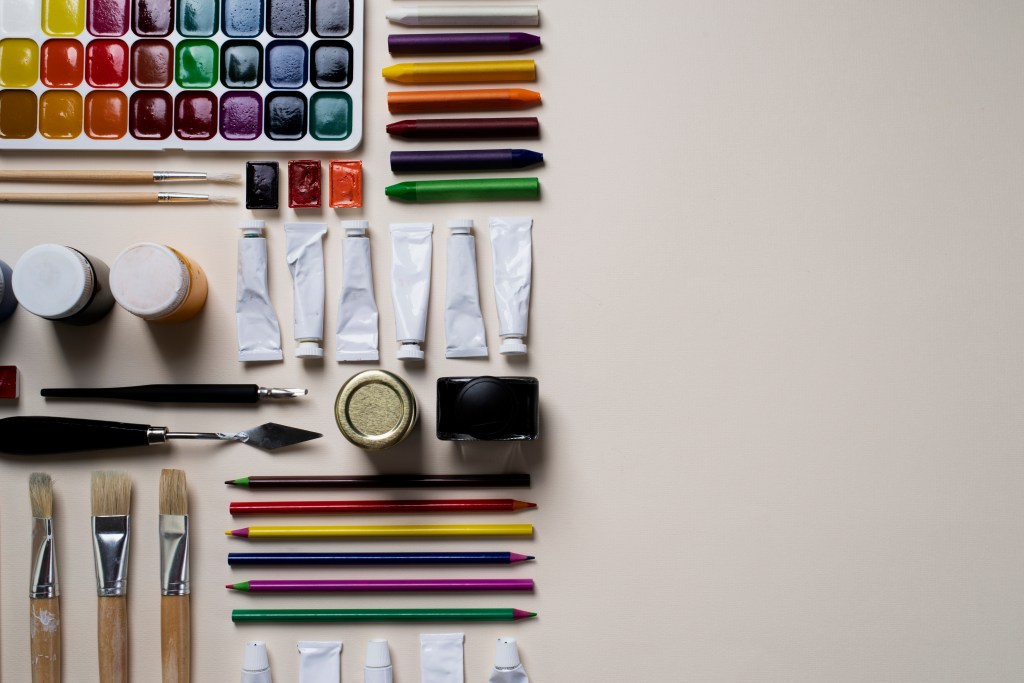
Creating powerful, high-quality art shouldn’t be limited by your budget—but any working artist knows how quickly materials can add up. From stretched canvas to archival paper, from oils to inks, the cost of being a fine artist can be intimidating—especially when you’re just starting out or working independently.
At the Women’s Artists Collective, we believe that resourcefulness is a creative skill in itself. With a bit of insider knowledge and flexibility, you can find materials that support your vision without compromising quality or artistic integrity.
Here’s a practical list of budget-friendly materials and strategies that don’t feel like cutting corners.
1. Upgrade Your Surfaces Without Overspending
Instead of: Pre-Stretched Canvas
Try: Canvas rolls, wood panels, or reclaimed materials
- Canvas Rolls: Buying raw or primed canvas by the roll (e.g., from Blick or Fredrix) allows you to cut custom sizes and stretch your own frames. You’ll save significantly in the long run.
- Birch Plywood Panels: Available at hardware stores like Home Depot, birch panels are great for acrylics and mixed media. Sand and gesso them, and you’re ready to go.
- Reclaimed Materials: Old cabinet doors, furniture parts, or even shipping crates can be transformed into unique, textured surfaces.
Pro Tip: Many artists swear by IKEA’s MÅLA paper roll for sketching or studies—just $6 for 98 feet of smooth, neutral-toned paper.
2. Drawing & Sketching Supplies That Deliver
Instead of: High-end graphite or pastel sets
Try: Open stock pencils, student-grade brands, or alternative mediums
- General’s, Prismacolor, and Faber-Castell offer excellent individual pencils that let you buy only what you need.
- Try charcoal sticks, graphite powder, or even coffee staining for expressive work with a natural feel.
- Student-grade doesn’t always mean low-quality—Cretacolor and Derwent Academy are solid options at a lower price point.
3. Affordable Paints That Still Pop
Instead of: Artist-grade tubes across the board
Try: Mixing student + pro-grade paints strategically
- Liquitex Basics, Winsor & Newton Cotman, and Blick Academic acrylics and watercolors are budget-friendly without being chalky.
- Use artist-grade paints for key colors (like cadmium red or ultramarine) and student-grade for neutrals or underpainting.
Pro Tip: Add depth to cheaper paints with high-quality mediums (gloss gel, matte medium, flow improvers). You’ll enhance texture and transparency for a fraction of the cost.
4. Brushes & Tools That Last
Instead of: Expensive natural hair brushes
Try: Synthetic brushes or alternative mark-making tools
- Princeton Snap!, Royal & Langnickel, and Simply Simmons make durable synthetics that work for oil, acrylic, and watercolor.
- Try kitchen spatulas, palette knives, or DIY brayers for bold texture.
- Don’t overlook the dollar store—foam brushes, sponges, and combs can create unique effects.
5. Where to Shop (and When)
- Art Supply Swaps: Many cities (and collectives!) host swap events where artists exchange unused materials.
- Creative Reuse Centers: Places like SCRAP, The WasteShed, and L.A. Reuse offer donated or surplus materials at extremely low prices.
- Thrift Stores: Look for frames, fabric, books, and even paints or pastels—especially in estate sale sections.
- Online Clearance: Bookmark the sale sections of Blick, Jerry’s Artarama, and Jackson’s Art Supplies for flash deals.
6. Shift the Mindset: Limitations = Innovation
Some of the most groundbreaking art comes from artists who had to improvise.
- Joseph Beuys used felt and fat.
- Louise Bourgeois made sculptures out of old linens.
- Jean-Michel Basquiat painted on found doors, refrigerators, and scraps.
Having fewer resources doesn’t diminish your artistic voice—it often sharpens it.
Final Thought
High cost doesn’t guarantee high impact. Great work is about intention, experimentation, and boldness—not brand-name supplies.
So before you max out your budget, ask:
- Can I substitute this?
- Can I build this myself?
- Can I borrow, trade, or repurpose?
Your creativity doesn’t stop at the canvas—it starts with the choices you make before the first mark.
Bonus: Quick-Start Budget Art Kit (Under $100)
| Item | Brand/Source | Est. Cost |
|---|---|---|
| Canvas pad or panel pack | Blick, Artist’s Loft | $15 |
| Acrylic set (student grade) | Liquitex Basics | $20 |
| Synthetic brush set | Princeton Snap! | $12 |
| Charcoal pencils | General’s | $7 |
| Gel medium | Liquitex or Golden | $10 |
| Palette knives (plastic) | Dollar store/Amazon | $5 |
| Sketchbook | Canson or Strathmore | $12 |
| TOTAL | $81 |

 Women's Artist Collective
Leave a comment